
Five years in the rep game, and here’s the stuff nobody talks about
Look, I already know what pops up when you Google “are replica Jordans worth it” or “best AJ1 reps.” You get a wall of articles telling you fakes will destroy your feet, the glue causes cancer, and you’re basically funding a criminal empire. Some of that has a kernel of truth. But it’s also lazy, one-sided noise that never actually answers the questions you really have.
I’ve been in this business for five years. Started out packing boxes in a stockroom, graduated to dealing directly with workshops, and now I spend my days inspecting leather cuts, midsole stitching, and shape profiles. I’m not here to hype you up or scare you off. I just want to pull back the curtain and explain how this whole replica sneaker world actually works, from someone who lives it every day.
The batch nonsense – stop getting hypnotized by buzzwords
If you’re new to this, you’ve probably seen terms like UA, super perfect, 1:1, pure original, PK, LJR, and a dozen more. It feels like a secret language designed to confuse you. Honestly? A lot of it is. But underneath the marketing fluff, reps really do come in distinct tiers. Here’s how I break it down for people who ask.
🔸 Budget tier (the stuff you should avoid)
These are the $40–$60 pairs plastered all over social media with stolen stock photos. Fake leather that smells like a chemical spill, cardboard midsoles, embroidery that looks like it was done by a drunk robot. Wear them a handful of times and they’ll start peeling, squeaking, or falling apart. I don’t touch these, and neither should you.
🔸 Mid-tier / "real boost" level
This is where a lot of the Instagram sellers live. They’ll call them “UA quality” or “1:1,” but in reality they get maybe 70% of the details right. From three feet away they can pass. Up close, you’ll spot fat toeboxes, sloppy logos, uneven stitching. The materials feel off – synthetic leather that’s too shiny or too matte, plastic-y wings logos. A lot of buyers get burned here because the price feels high enough to be “the good stuff,” but it rarely is.
🔸 Top-tier / retail-grade batches
These are the ones that actual rep enthusiasts hunt for. Factories buy the authentic pair, tear it down stitch by stitch, and source comparable materials – we’re talking genuine tumbled leather, correct suede nap, accurate midsole densities. The molds are recut to match the original shape, down to the hourglass heel curve. Production runs are small, quality control is tight, and once a batch is gone, you might wait months for a restock.
Even within this tier, there are differences between specific factory batches (think LJR, FK, PK 4.0, etc.), and the “best” one can change from colorway to colorway. That’s why I always tell people: don’t marry yourself to a batch name. Look at the actual pair you’re being sent.
The seller matters more than the batch
I’ve seen the exact same batch sold by two different people, and the experience was night and day. One guy sends every pair through a QC check, catches flawed pairs before shipping, and answers questions like a normal human. The other guy ghosts you the second payment clears. Finding a seller who’s honest and detail-oriented is worth more than any batch hype.
- Insist on tagged, natural-light photos: Studio-lit white background shots are easy to steal. You want to see the shoe in someone’s hand, with their username written on a piece of paper, in natural light. That proves they actually have the stock and aren’t hiding warped shapes.
- Ask annoying questions: Hit them with specifics. “Does this Chicago AJ1 have a visible hourglass shape from the back?” “Is the red leather a soft tumbled finish or a stiffer smooth leather?” If they get defensive or reply with generic “best quality bro” messages, they don’t know their own product.
- Check how they handle problems: What happens if the box gets crushed in transit, or there’s a glue stain? A reputable seller will sort it out – exchange, refund, whatever’s fair. The ones who post “all sales final” and then disappear? Red flag city.
- Ignore “will pass StockX” guarantees: Anyone claiming their reps will consistently pass authentication platforms is lying to you. Top-tier pairs can sometimes slip through if the authenticator is having a bad day, but banking on that is foolish. If a seller leans hard on “pass Legit Check,” they’re probably overcompensating for mediocre product.
The AJ1 – a perfect case study in what separates good from garbage
The Air Jordan 1 is the most repped silhouette on the planet, and it’s also the one where the gap between cheap batches and top batches is most obvious. Even if you don’t know fancy legit-check jargon, you can learn to spot the differences in about five minutes.
The hourglass shape
Look at the shoe from the rear. A retail AJ1 – and a properly made rep – curves inward at the waist, then flares out slightly at the heel and collar. It’s subtle, but it gives the whole shoe that sleek, athletic silhouette. Budget reps look like straight bricks from the back, no shaping at all.
Toebox profile and perforations
On a good pair, the toebox slopes gently and isn’t puffy. The perforation holes on the toe are clean, uniform, and follow the correct arc. On cheap pairs, the holes can be different sizes, punched at weird angles, or surrounded by jagged edges. The toe itself often looks inflated, like a balloon.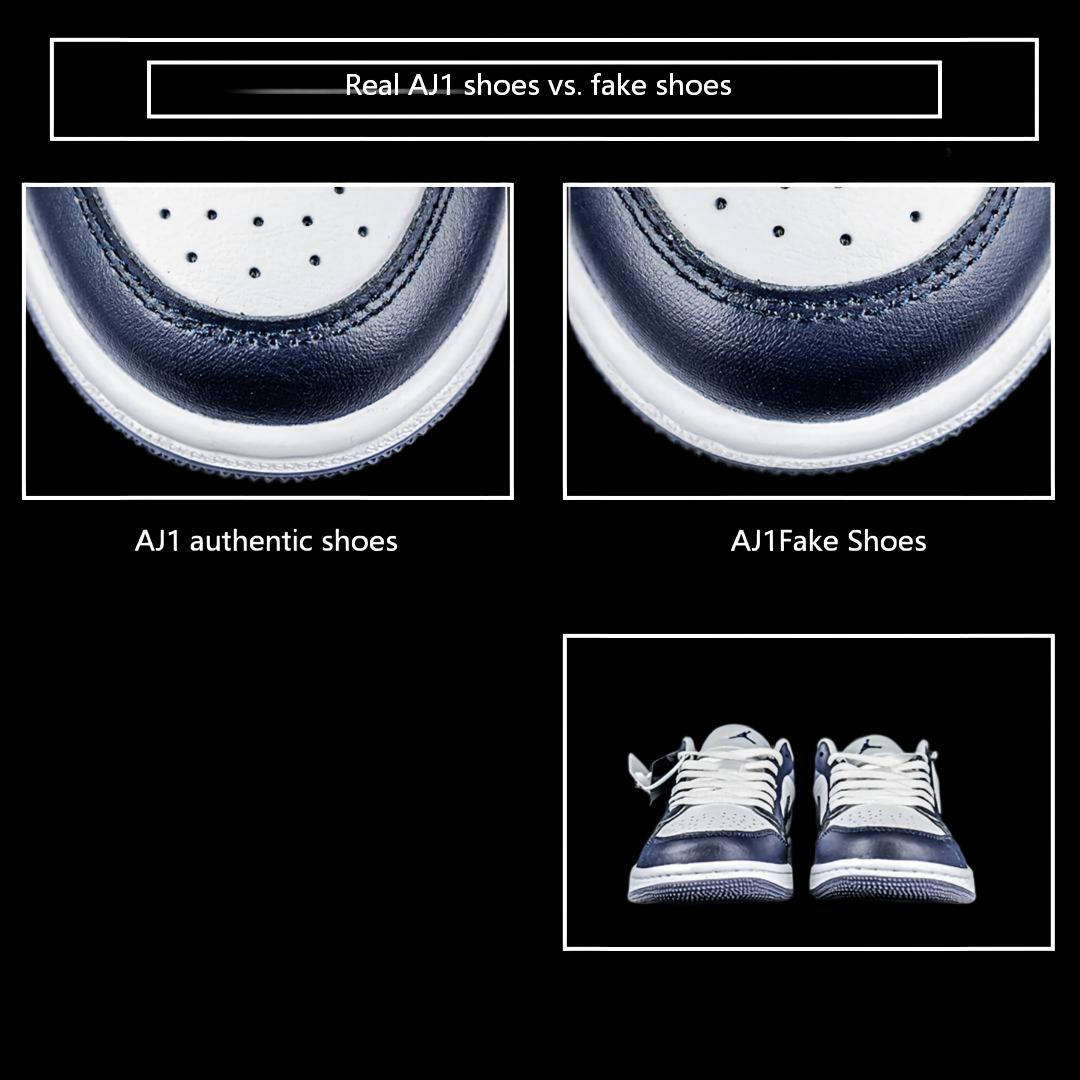
Wings logo depth
Here’s a quick one: the wings logo should be deeply debossed into the leather, not just surface-stamped. Run your finger over it – you should feel a distinct, crisp recess. The letters “R” and “D” in “JORDAN” should touch at the bottom. Low-tier reps often have shallow, blurry stamps that wear off quickly.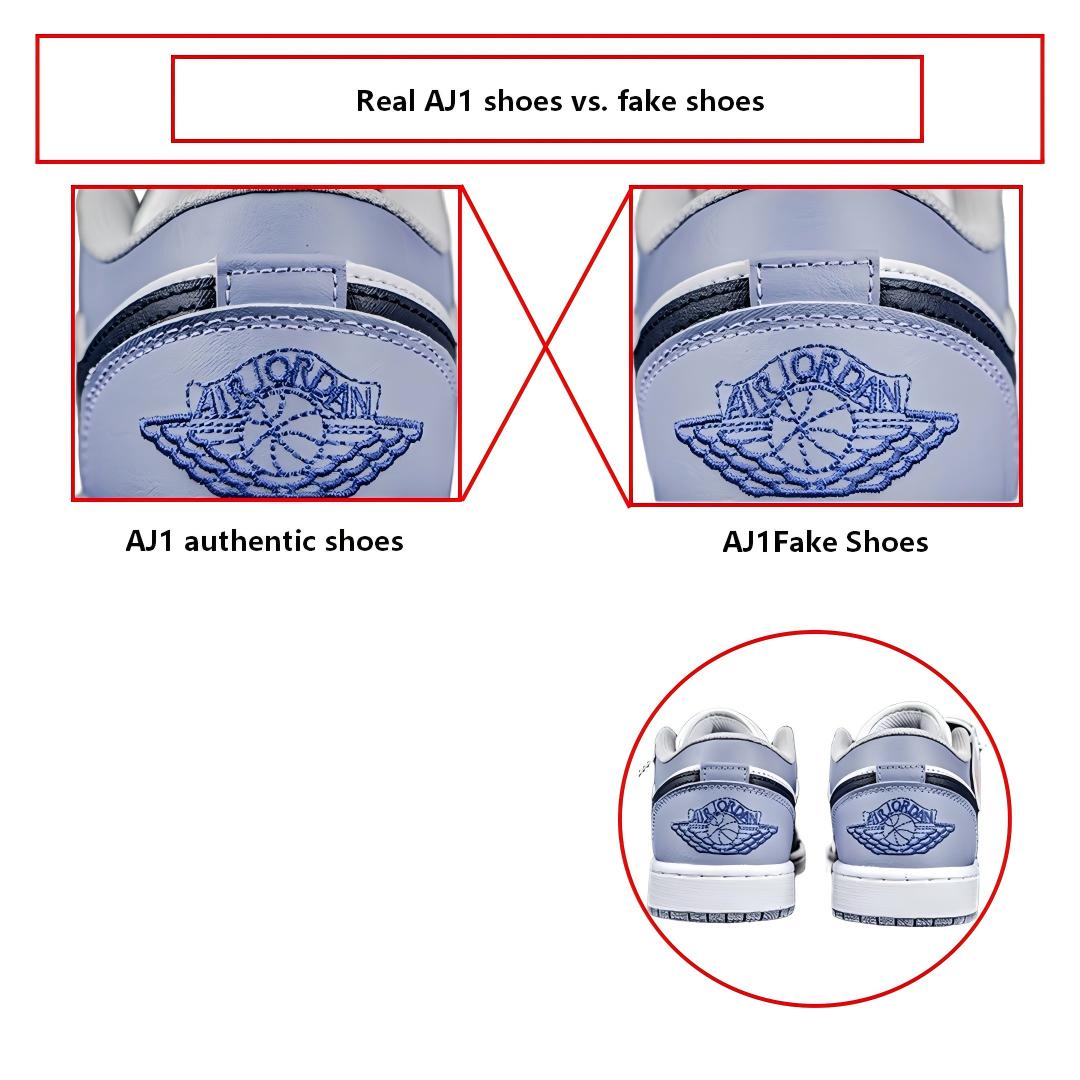
Midsole stitching and insole glue
Pop out the insole. On a top-tier rep, you’ll see tight, evenly spaced stitching running across the midsole, with a light, consistent brush of adhesive – just like retail. Low-end pairs have messy, erratic stitching and globs of cheap glue everywhere. It’s one of the easiest tells once you know to look.
These details are exactly what I check before I ship anything. If you’re ever comparing two pairs side by side and you feel like one just looks “right” while the other feels “off,” it’s usually the accumulation of these tiny things. Trust your eyes, not the sales pitch.
Wear them like you mean it, not like you’re hiding something
This might ruffle some feathers, but I’ll say it anyway: if you’re buying reps because you want people to think you dropped $2,000 on a pair of sneakers, you’re setting yourself up for a bad time. The anxiety of “what if someone calls me out?” will eat at you, and you’ll never enjoy the shoes.
Most of my long-term customers are just sneaker lovers who got tired of losing raffles and paying absurd resale prices. They buy the colorways they actually like, wear them into the ground, and don’t make a big deal about it. If a friend asks, they’ll just say “yeah, they’re reps” and move on. Nobody cares as much as you think they do.
Top-tier reps today are genuinely well-made sneakers. The leather is soft, the air units have actual bounce, and they hold up to daily wear. That’s the real value – a shoe you can actually live in, not a museum piece locked in a glass box.
It’s just footwear, man
I’ve written way more than I planned, but here’s the bottom line: whether you buy retail or reps, what matters is that you’re happy with what’s on your feet. Don’t let marketing hype bully you into debt, and don’t let fear-mongering articles convince you that every rep is a health hazard. Use your brain, ask questions, look at the actual product, and make your own call.
If you’ve got a pair you’re unsure about, or you just want to see what a true top batch looks like up close, I’m always hanging around sharing unpolished, honest photos. No pressure, no sales pitch. Just someone who’s spent way too many hours staring at stitching.
Stay curious, trust your gut, and wear what you like. See you around.